


Experiment No.1 OHM’S LAW
Apparatus required

Circuit Diagram

Experimental setup

Procedure
- Connect the ammeter in series with the circuit wire and the voltmeter in parallel with the wire.
- Note the zero error of the metres.
- Calculate the least count of the metres.
- Switch on the circuit.
- Set the rheostat to a particular position and record the readings of the ammeter and voltmeter.
- Repeat steps 5 and 6 for different settings of the rheostat.
- Tabulate the readings.
- Calculate the resistance of the wire using the formula R=V/I
Least count of ammeter

Least count of micro ammeter- Image

Least count of voltmeter

Least count of voltmeter – Image

Tabular Column & Observation

Ohm’s law experiment – Calculation by graphical method

Graphical method to find the resistance

Experiment No. 2 RESISTORS IN SERIES
Apparatus Required
Circuit Diagram

Experimental setup

Procedure
- Connect the ammeter in series with the circuit wire and the voltmeter in parallel with the wire.
- Note the zero error of the metres.
- Calculate the least count of the metres.
- Switch on the circuit.
- Set the rheostat to a particular position and record the readings of the ammeter and voltmeter.
- Repeat steps 5 and 6 for different settings of the rheostat.
- Tabulate the readings for two individual resistors R1 and R2 separately
- Experiment is repeated for the combination of two resistors(series).
To find the resistance of R1

To find the resistance of R2

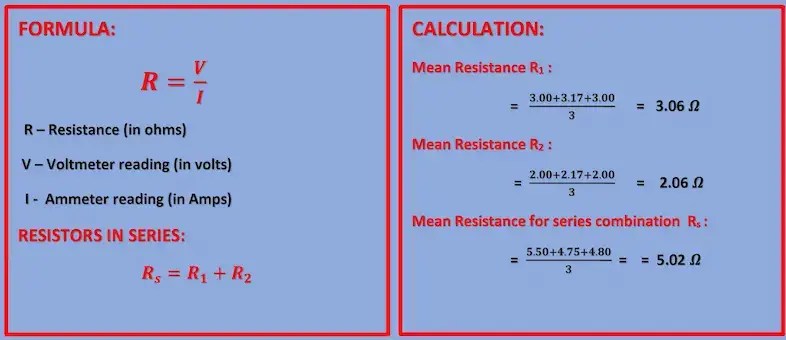
Series combination of resistors – Formula and Calculation

Formula and Calculation
Experiment No.3 RESISTORS IN PARALLEL
APPARATUS REQUIRED

Procedure
- Connect the ammeter in series with the circuit wire and the voltmeter in parallel with the wire.
- Note the zero error of the metres.
- Calculate the least count of the metres.
- Switch on the circuit.
- Set the rheostat to a particular position and record the readings of the ammeter and voltmeter.
- Repeat steps 5 and 6 for different settings of the rheostat.
- Tabulate the readings for individual resistors R1 and R2
- Repeat the experiment for the combination of resistors(Parallel)
To find the resistance R1

To find the resistance R2

Parallel combination of two resistors
Experiment No.4 FOCAL LENGTH OF CONVEX LENS
CONVEX LENS

FOCAL LENGTH OF A CONVEX LENS – BY DISTANT OBJECT METHOD

FOCAL LENGTH OF A CONVEX LENS BY DISTANT OBJECT METHOD- IMAGE
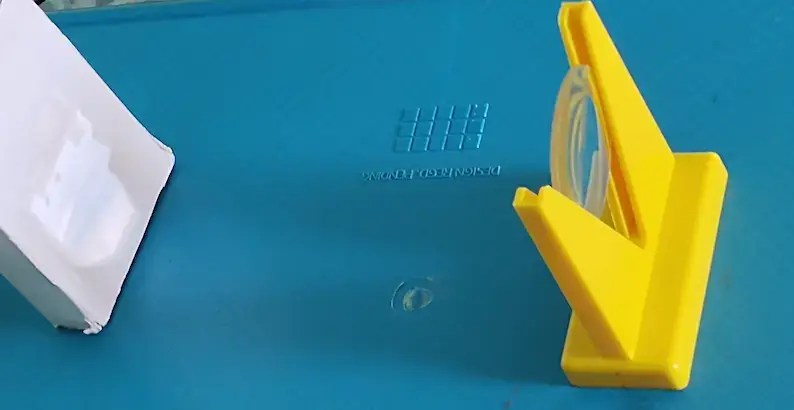
FOCAL LENGTH OF THE GIVEN CONVEX LENS – TABULAR COLUMN
| S.No | Distance between optic center(O) and the principal focus(F) (in cm) |
Focal length of the given convex lens (in cm) |
| 1. | 10.0 | 10.0 |
| 2. | 10.1 | 10.1 |
| 3. | 9.9 | 9.9 |
RESULT
The focal length of the given convex lens by distant object method is = 10 cm
To measure the focal length of convex lens by u-v method (VERIFICATION)

Experiment No.5 FOCAL LENGTH OF CONCAVE MIRROR
CONCAVE MIRROR – IMAGE

CONCAVE MIRROR- SIGN CONVENTION

Experiment No.6 REFRACTION THROUGH A GLASS SLAB
REFRACTION THROUGH A GLASS SLAB

REFRACTION THROUGH A GLASS SLAB- DESCRIPTION
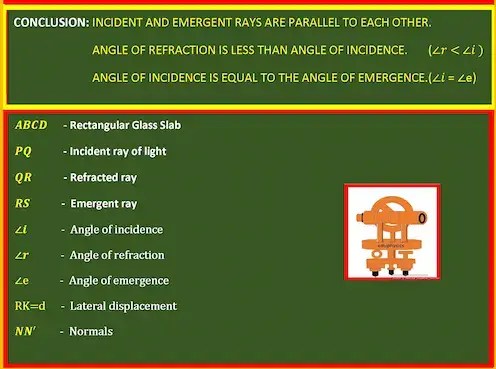
Experiment No.7 REFRACTION THROUGH A GLASS PRISM
REFRACTION THROUGH A GLASS PRISM- IMAGE

REFRACTION THROUGH A PRISM – DESCRIPTION

Experiment No.8 IMAGE FORMATION OF CONVEX LENS
FORMATION OF IMAGE BY CONVEX LENS – OBJECT BETWEEN F AND 2F

CONVEX LENS-OBJECT BETWEEN F AND 2F – SIGN CONVENTION

FORMATION OF IMAGE BY CONVEX LENS- OBJECT BETWEEN F & O

Conclusion:
Physics practicals can be a valuable experience for students to learn concepts, develop important skills, develop their problem-solving skills, have the opportunity to develop their experimental skills such as data collection, analysis, and interpretation, and have the ability to develop their communication skills, which can help them identify and correct errors in their work.
Vous devez être connecté pour poster un commentaire.