TABLE OF CONTENTS
Precision measurements:
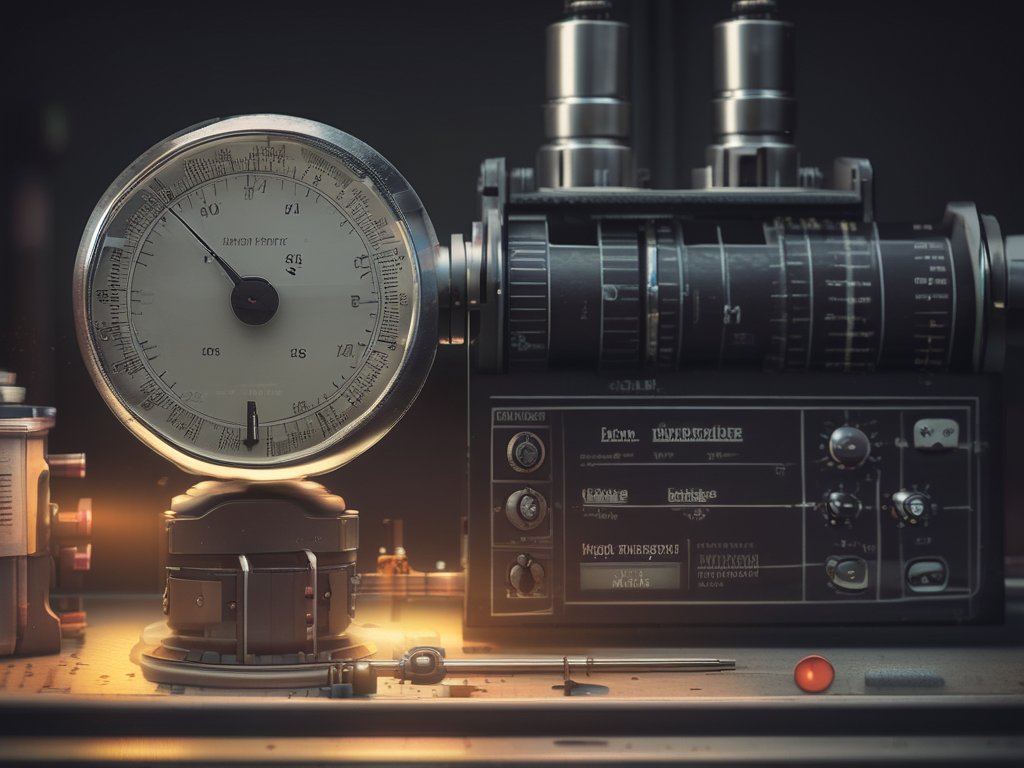
Precision measurements refer to any physical quantity that can be measured precisely and consistently.It necessitates specialist equipment and unique methodologies, and the outcomes must be extremely near to the genuine value.precise measures that guide choices that lead to risk-taking missions and innovative scientific discoveries.
Benefits of precision measurements
- Success depends on accurate measurements, which minimise mistakes or inconsistent outcomes from experiments..
- Measurements should guarantee that operations and research are done accurately and safely.
- Scientists can create new materials and technology because of precision measurements.Due to the gravitational interaction between the two objects, widening of the Earth and Moon may be taken into consideration.Between Earth and the moon, the average reflection time of a laser beam is 2.5 seconds.
- Reliable information from precise measurements is used to inform decision-making.
- There will be serious repercussions if precision measurements are not made, notably in the medical, aerospace, and space launch systems industries.
- By minimising waste, precision measurement promotes cost savings and increased effectiveness.
- By minimising waste, precision measurement promotes cost savings and increased effectiveness.

ACCURACY AND PRECISION
ACCURACY:
- Accuracy in maths, science, and engineering is the measure of how closely a value is measured to its genuine value.For instance, measurements of a wire’s resistance are quite precise since they are very near to the true value.
- In maths, science and engineering accuracy refers to how close the
- Accurate measurement is important in order to obtain reliable results
- Accuracy and reliability is essential for safety and mission success.
- Importance of measurement accuracy is especially important for the space launch system.
- GPS processing on a global scale is revolutionary.World’s global positioning systems have high accuracy.
- Accurate measurement has no systematic and random errors.
PRECISION
Precision refers to how close multiple measurements are to each other in order to obtain consistent precise measurements are required.
TYPES OF PRECISION MEASUREMENT
FORCE MEASUREMENT
Force measurement is the use of force transducers to measure forces such as pressure,torque and weight.Force measurements are used in various industries like automotive,aerospace,and medical.
Torque :Torque is a twisting force that acts on an object.Weight :Weight is a force due to the pull of gravity on an object.Pressure: Pressure is the force acting per unit area.
MOTION MEASUREMENT
Motion measurement is the use of motion sensors to measure movement such as speed, acceleration and position.Motion measurements are used in various industries like automotive,aerospace and robotics.
Speed :It is the distance travelled per unit of time.Acceleration :It is the rate of change of velocity.
OPTICAL MEASUREMENT
Optical measurement is the use of light to measure distance, size, shape and other characteristics.Optical measurements are used in various industries like engineering,Manufacturing and medical research.
CONCLUSION
Precision measurement is an important practice in the field of science,industry,engineering automotive, manufacturing, medical, research etc.It involves the use of tools and techniques to achieve the most accurate measurements possible.
Laisser un commentaire